
The project brings together leading senior and junior scholars with strong international profiles within their respective fields of financial history, political history, and material culture. Two doctoral students will be recruited in 2026.
Christopher Pihl
Associate professor, project leader

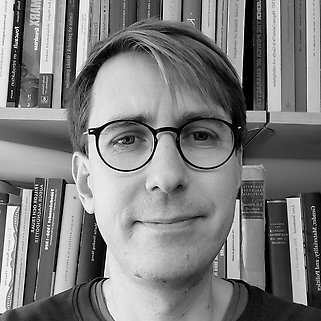
Martin Almbjär
Associate professor, Co-project leader
Almbjär is active in different fields of early modern and modern history, such as political history with a focus on petitions, institutional development, and political participation, as well as the history of making long trade work, trade, security and diplomacy in the 1700s, and the history of money.
Within the project, Almbjär’s role is to examine 1, the usages of money, credit and barter within the Swedish Empire by making use of account books, court records and forgery cases, as well as 2, the political consequences within Sweden and Finland proper stemming from imperial monetary policy.
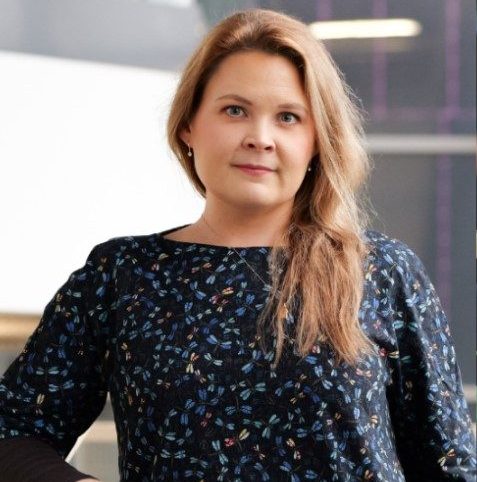
Astrid Wendel-Hansen
PhD, researcher
Astrid Wendel-Hansen is a historian specialising in the social and cultural history of early modern Northern Europe, with particular expertise in material culture, consumption and social inequality in the Swedish Baltic region. She received her PhD in 2020 from Uppsala University with a dissertation Dress Matters: Clothes and Social Order in Tallinn, 1600–1700 and is currently senior research fellow at the Archaeological Research Collection of Tallinn University. She previously held research and teaching positions in Germany and Sweden.
Within the project Astrid will investigate how ordinary people in the Swedish Baltic Empire navigated the early modern monetary landscape, often marked by the use of multiple currencies, including counterfeit coins, as well as recurring shortages of cash. Focusing primarily on court materials from Tallinn and Riga, her research examines how everyday objects such as clothing, foodstuffs, and household goods functioned as alternative forms of payment in commercial exchanges, as well as how their value was negotiated and expressed in monetary terms. Her work on everyday economic life in the Swedish Baltic Empire aims to contribute to broader questions about economic integration within early modern polycentric empires.

Dorothée Goetze
Assistant professor, researcher
Dorothée Goetze is a scholar of early modern history whose research focuses on the Holy Roman Empire and the Baltic Sea region as well as the relations between the two. Her particular interests include political and constitutional history.
Within the project, Goetze will study the monetary policies of the Swedish crown in her capacity as princes of the Holy Roman Empire. This will thus bring new knowledge not only about how the Swedish Empire tried to implement monetary policy in its provinces, but also about how foreign states with territories within the Holy Roman Empire (such as Great Britain, Sweden or Denmark) could influence politics within this centrally placed and geopolitically important polity in the early modern era.