
Purpose and research questions
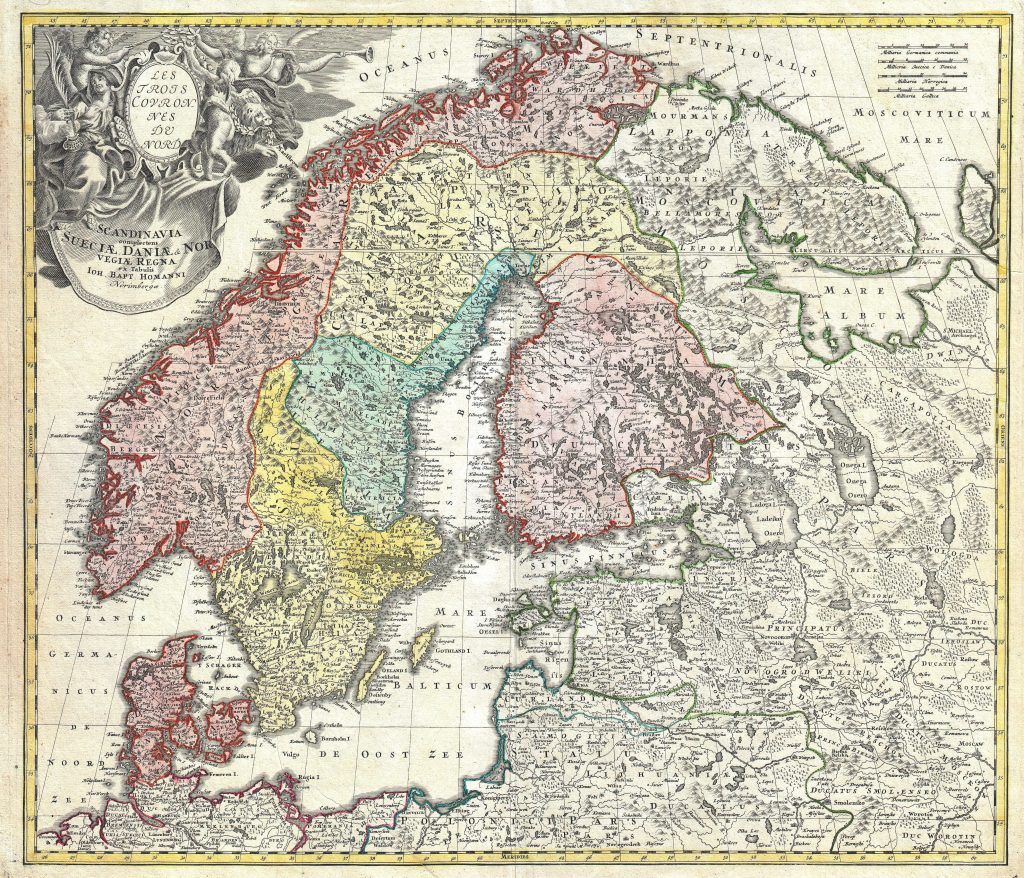
The purpose of this project is to understand long-term monetary development and monetisation in the Baltic Sea region during the early modern period. Using the Swedish Empire as an example, this project examines the issuance, use, and circulation of money as core elements of empire- and state-building. It also explores how the state’s monetary policies both shaped and were shaped by the practices, interests, and political participation of local powerholders and ordinary subjects. The project makes several important interventions in the existing scholarship: 1) The long-term monetary and economic development of the Baltic Sea region cannot be understood through an examination of Sweden-Finland alone; instead, we challenge the prevailing methodological nationalism by focusing on the entire region. 2) We significantly broaden the perspective of monetary history by illuminating the ordinary subjects, their perceptions of money, and everyday practices related to it. 3) We argue that money was a key component of early modern state formation and connect monetary developments to the political history of the region.
Today’s society rests on a sturdy monetary foundation with ready access to cash and stable currencies. Crucial steps in building this foundation were taken in the early modern period. The inhabitants of early modern Europe faced substantial shifts in their daily encounters with money—as a unit of account, a medium of exchange, and a store of value—when states began to produce more and new forms of money. Parallel to the international currency system based on gold and silver coins of high purchasing power, national, and even local, currency systems characterised by instability and volatility shaped the everyday of ordinary European women and men. Additionally, legal tender was no longer always made of gold and silver, but of copper or even paper. These shifts were driven by increasing demands for currency, prompted by the growing costs of warfare, expanding trade, and the use of money by states as a tool to achieve economic, social, and political goals.
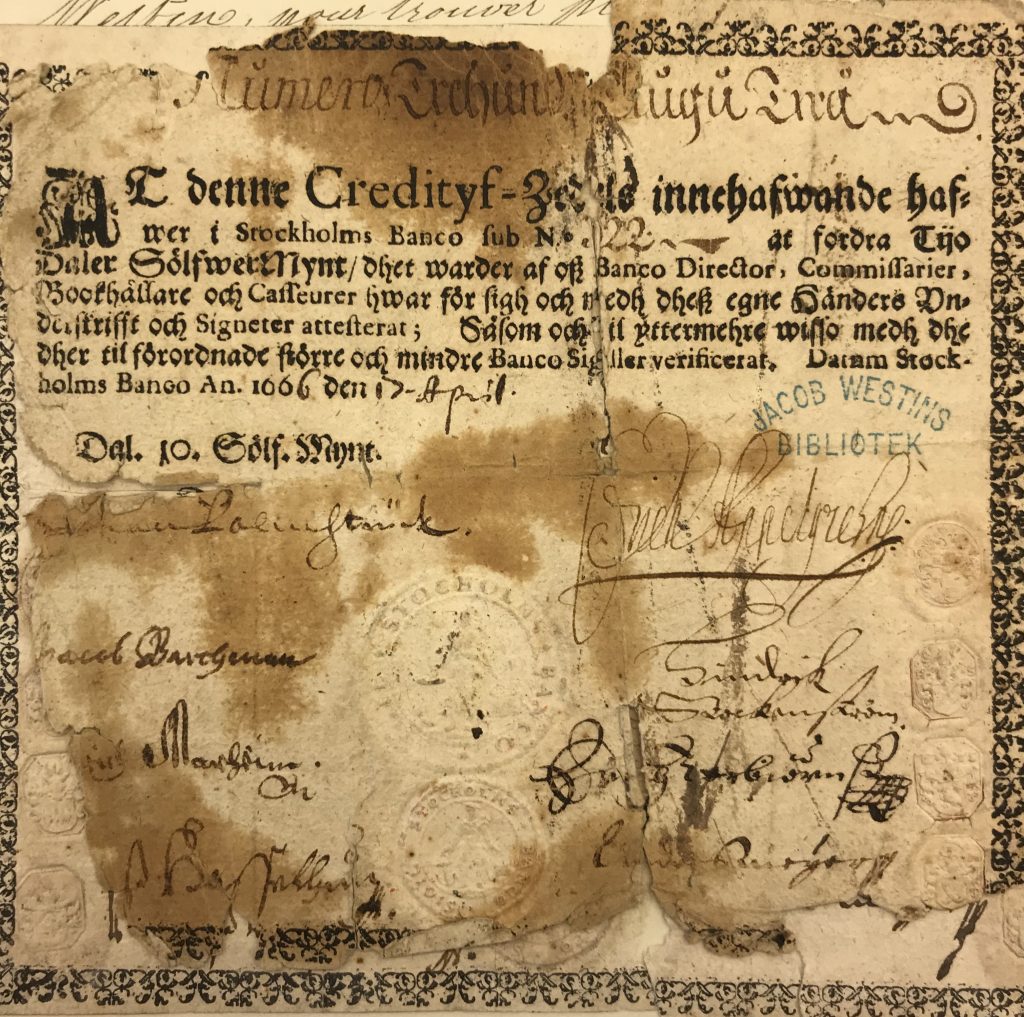
In other words, a shift occurred as money gradually became a bearer of abstract value not guaranteed by precious metals. Yet, creating a stable, coherent and transparent monetary system proved challenging. Early modern European states were notoriously unable, or even unwilling, to sustain a functioning monetary system, resulting in chronic money shortages, regular debasements, and frequent money forgeries. Volatile monetary policies put high demands on people’s financial and monetary literacy. The need not only to learn intermittently about new forms of money but also to keep track of exchange rates created profound connections between policy and everyday life. In Sweden, this entanglement is well illustrated by a series of monetary reforms that took place over the course of the period. For example, in Sweden-Finland at least one new decree was issued annually during the period, resulting in a system of bewildering complexity, including a ‘perplexing parallel use of several domestic currencies’.
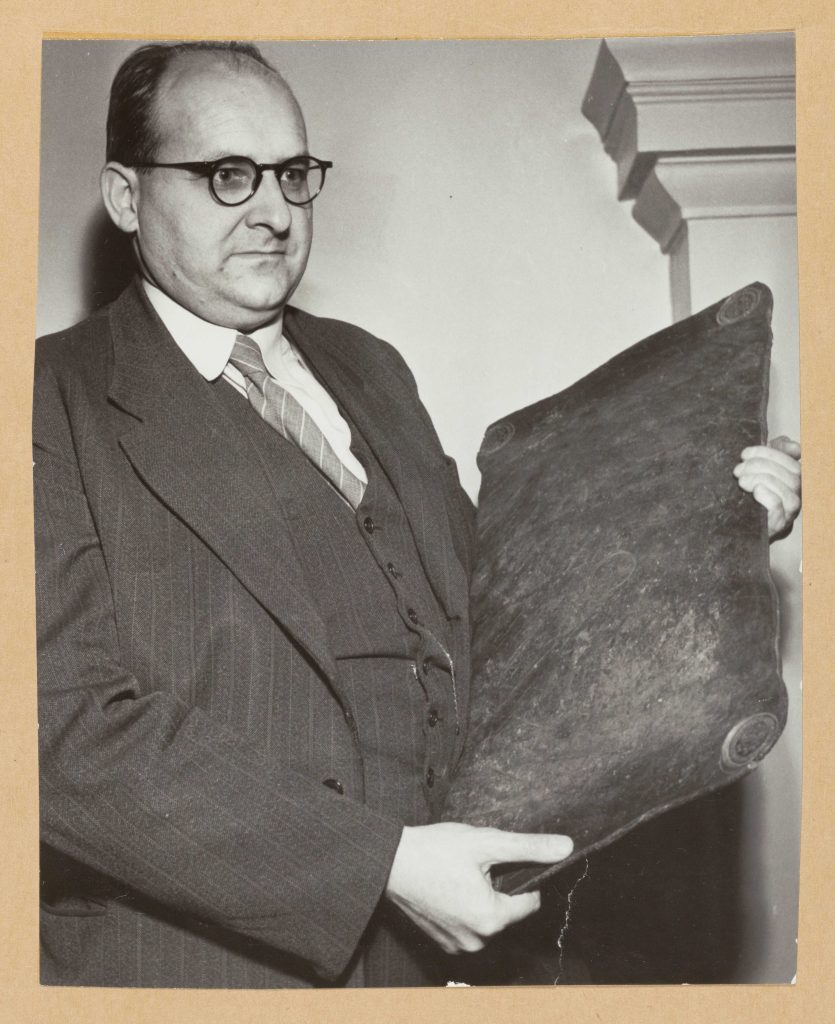
The Swedish Baltic empire provides an excellent case study for analysis of early modern state formation and monetary change, and how both processes were integrated with the other. As a result of territorial expansion in the sixteenth and seventeenth centuries, Sweden emerged as what has been described a ‘composite state’, meaning that the individual territories had different legal, cultural, and economic relationships to Stockholm and were united by the person of the ruler. At the same time, the Swedish state was an early adopter of financial novelties such as copper plates as commodity money, paper bills, and a central bank. Previous research has habitually failed to account for these complexities, implying that monetary evolution was exclusively a top-down process: the state introduced monetary policies, and the subjects accepted them without protest. This picture is entirely too simplistic.
Our aim is to examine money as both a practice and a political problem, involving not only elites on state and regional levels but also regular people, their concepts of money and value, and the impact their actions had on the monetary evolution in the region.
A practice: Rebecca Spang has aptly remarked that ‘Adam Smith, and the marquis de Condorcet had ideas about money, so too did any woman who bought bread, sold fish, or pawned her wool blanket every summer’. The problem is, however, that Smith and Condorcet wrote down their thoughts, whereas fishwives did not. Indeed, we know almost nothing about how regular people used and conceptualised money or how monetary novelties and reforms were conceived of and received. Social and cultural aspects of money have until recently been neglected in the study of the early modern economy, although research has established that different social groups had different preferences and capabilities when meeting change. The peasantry in Sweden in 1746, for example, protested against paper bills because they were hard to understand and easily broke. They wanted more copper coins instead. Through focusing on monetary practices, we will highlight the intersection between the state’s monetary policies and people’s monetary perceptions and customs.
A political problem: The processes of monetary evolution politically mobilized people, generating protests, demands, and riots that created challenges for the authorities to address. However, how these issues were discussed and resolved has not been systematically studied. Moreover, the many different interests—e.g. the Crown, the nobility, local authorities, merchants, and ordinary users of money throughout the Swedish Baltic Empire—made it impracticable to find solutions satisfying to all. For instance, while it made sense for the state to pay for the conquest of Livonia with Swedish copper coins, this policy drained the Swedish countryside of cash, rendering tax collection all but impossible. Fluctuating exchange rates further compounded the problem and generated unrest, and even riots, when tax collectors arrived. When analysed by previous research, this unrest has been understood primarily as a domestic issue, but, as we argue, it was intrinsically linked to the Empire and imperial monetary policies. To understand how situations like these formed part of the Empire’s history, not just the history of Sweden or Latvia, we must broaden our knowledge about how subjects reacted to monetary policies and how powerholders experienced and grappled with the actions and reactions of their subjects.